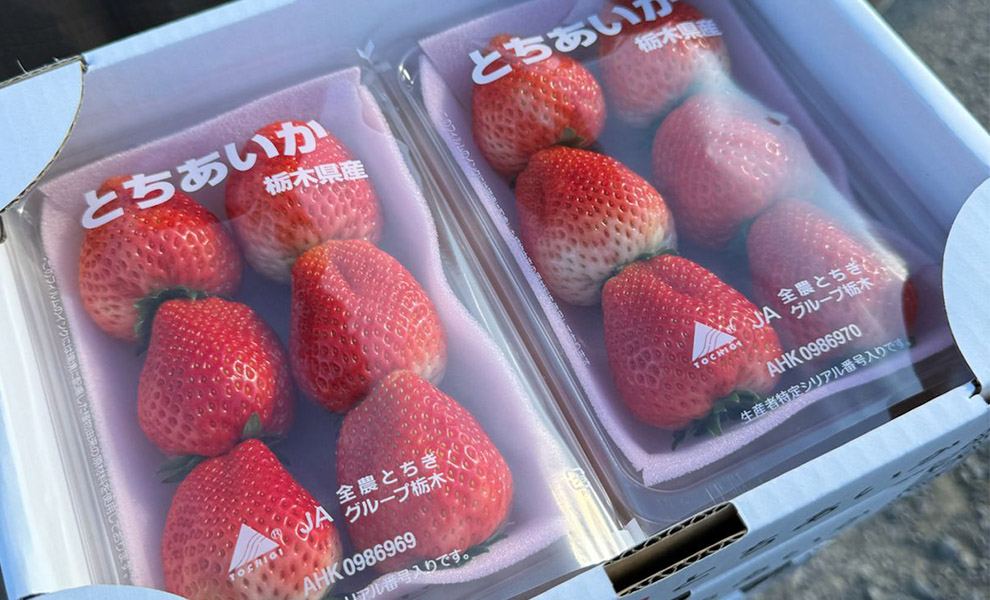
Polyfly drives sustainable pollination in Japan with its hoverfly pollinators



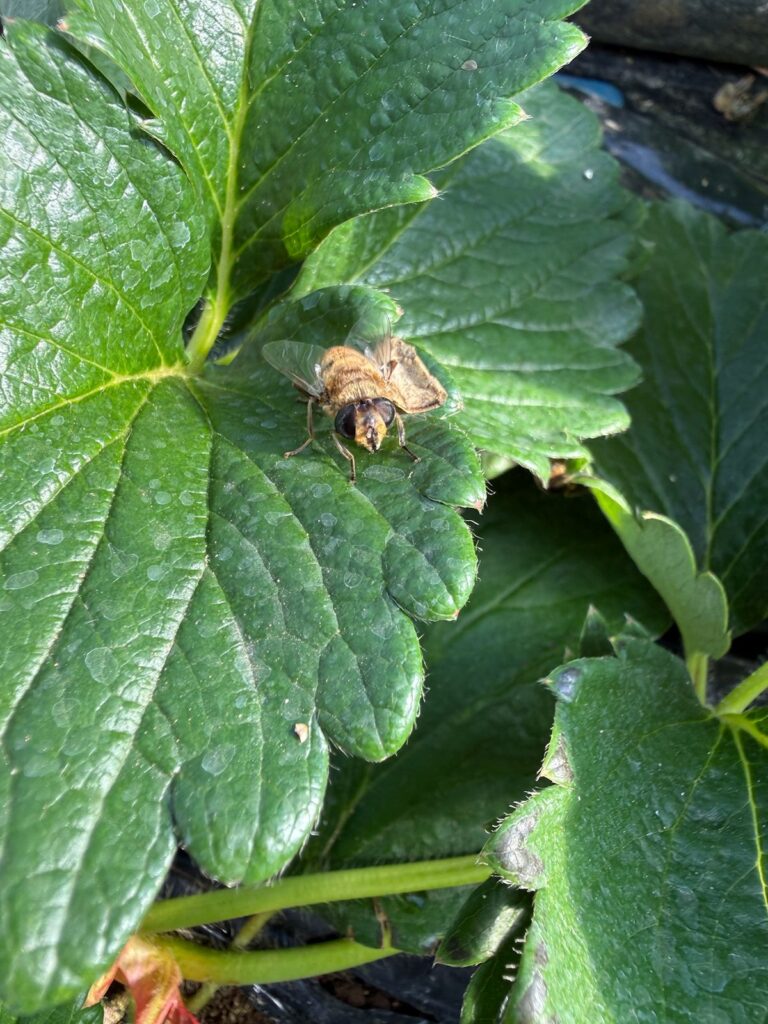
At a time when the global shortage of traditional pollinators poses critical challenges for agriculture, Polyfly reaffirms its international leadership. The prestigious magazine Japan Agricultural News highlighted how our hoverflies (ハナアブ) have become key “allies” for Japanese farmers in the pollination of strawberries, watermelons, and melons.
Thanks to unprecedented logistical innovation, Polyfly has succeeded in removing geographical barriers, enabling the shipment of hoverflies from our headquarters in Almería to the heart of Japan. This global export capability ensures that pollinators, reared at our industrial facility in Almería, arrive in perfect condition through our partner Api Co., Ltd (Gifu, Japan). With this milestone, we introduce a sustainable, high-tech pollination solution to the Japanese market, a sector internationally recognised for its extremely high quality standards and currently seeking alternatives due to the shortage of honeybees.
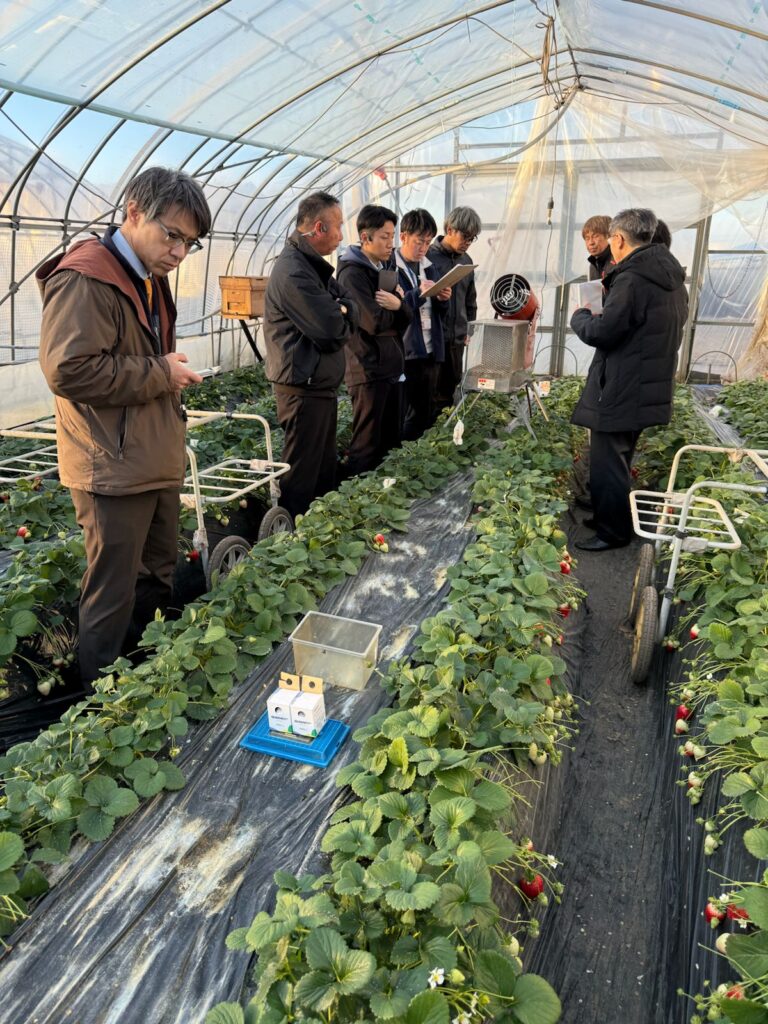
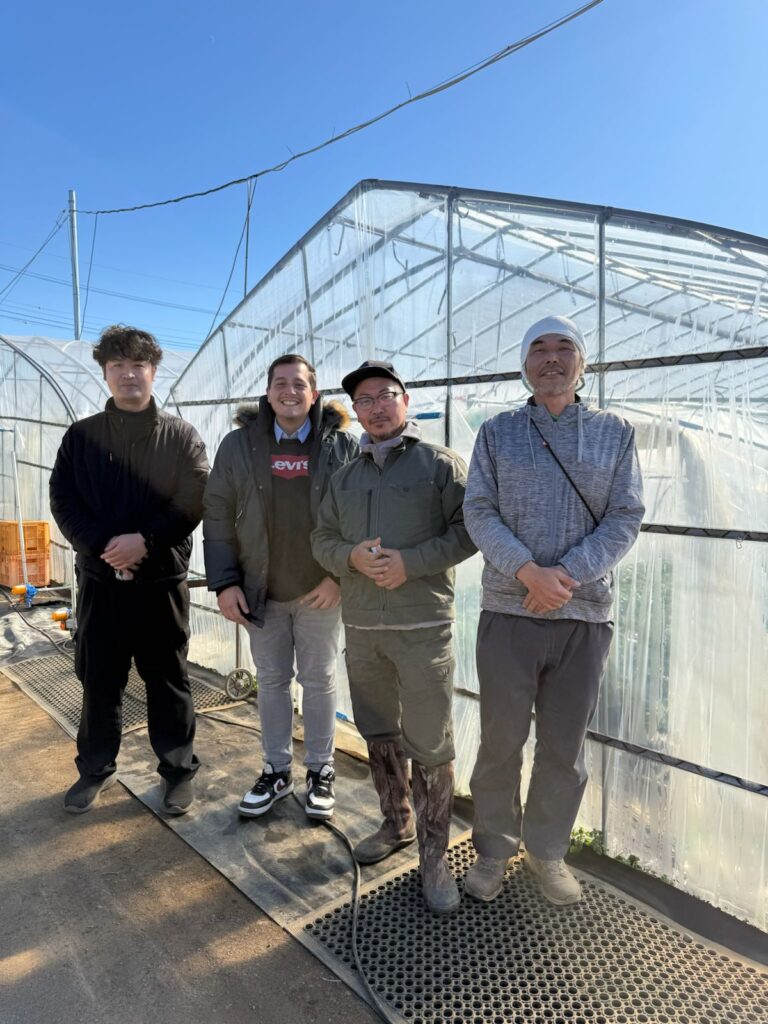
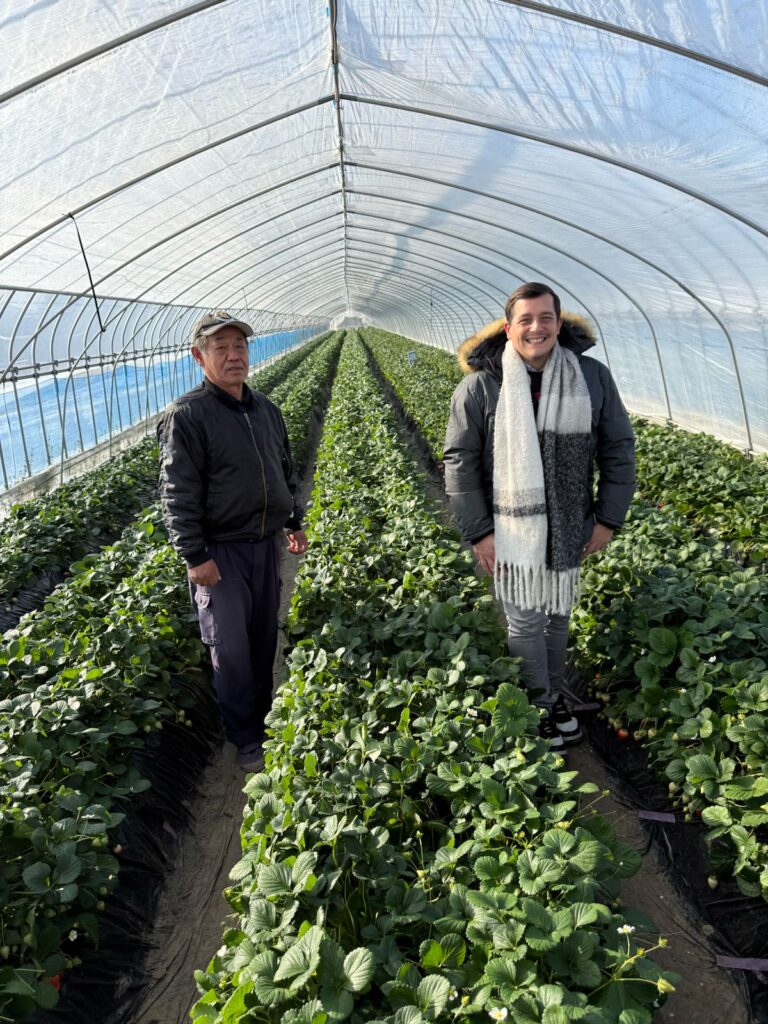
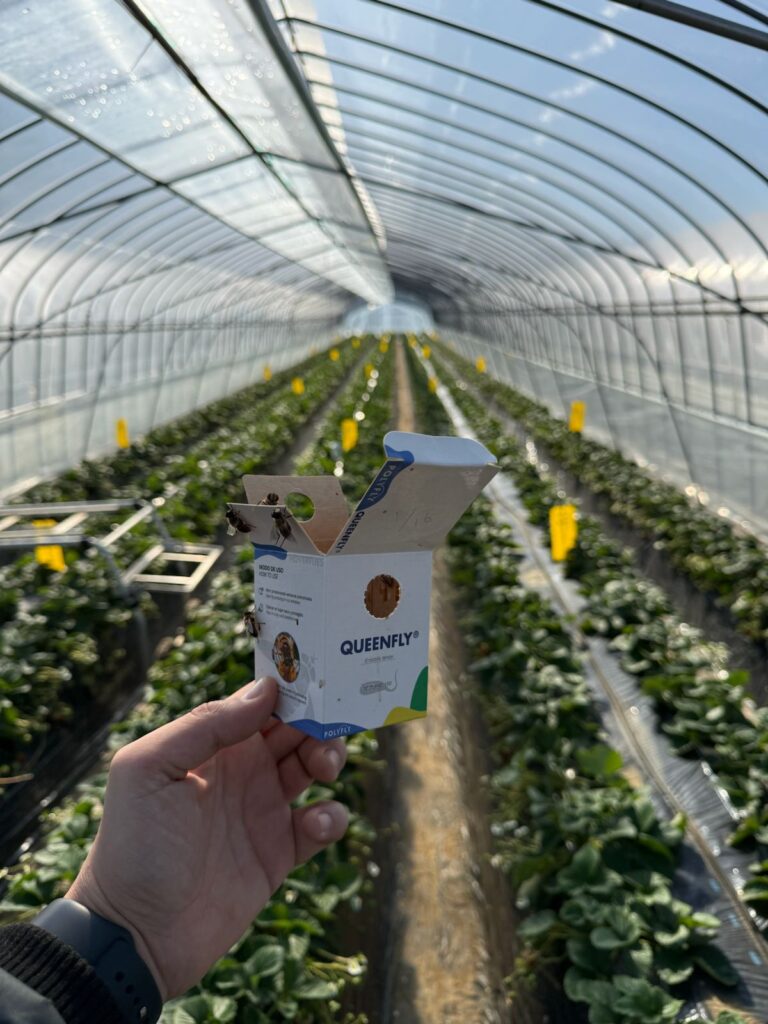
During recent technical visits carried out in Japan, Polyfly has been able to verify first-hand the positive reception of its hoverfly pollinators among local growers. Since last September, several strawberry producers have been working with Queenfly®, combining its use with bees in mixed pollination systems. Overall feedback has been very positive, both in terms of pollination efficiency and ease of handling, generating strong interest in progressively expanding its use. This technical support process, carried out jointly by the Polyfly and Api Co teams, has also enabled one producer to move towards a pollination model based entirely on hoverflies for strawberry production, a significant milestone in such a demanding market as Japan.
We are currently conducting new trials in melon and watermelon crops, whose flowering will begin at the end of February, with the aim of evaluating hoverfly performance under different conditions and production cycles, following results already validated in Spain.
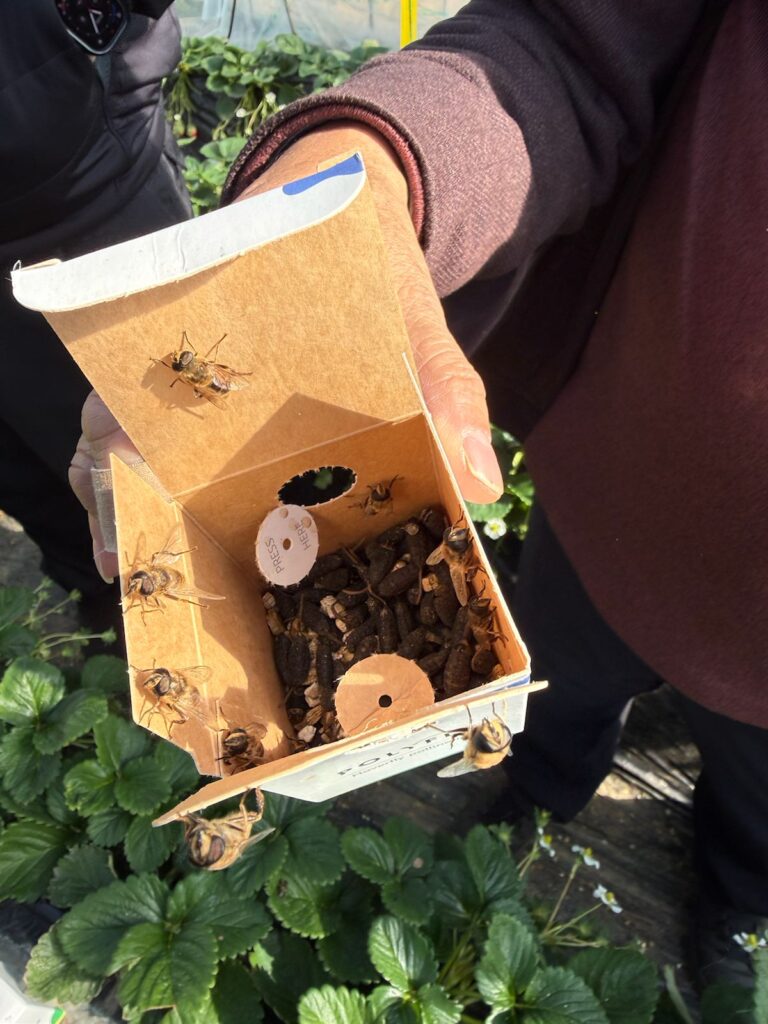
Logistical innovation at the service of global pollination
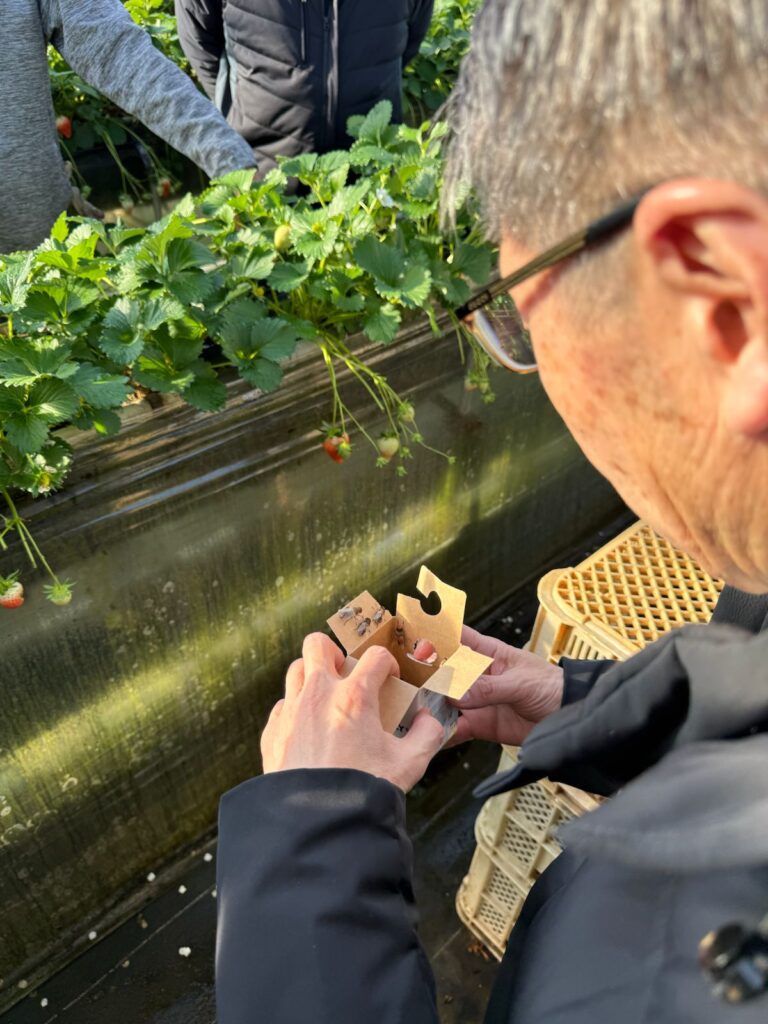
Our solution allows hoverflies to be shipped as pupae in boxes specifically designed for handling. Once placed at the appropriate temperature by the grower, the insects emerge within a few days ready to work. Hoverflies do not have a homing instinct, remaining on the plants as long as sufficient flowers are available, ensuring pollination coverage for between 2 and 4 weeks.
As our colleague Christopher Duran explains, “success does not lie in completely replacing traditional pollination methods, but in knowing how to combine the biological tools available according to crop type and specific conditions. The reception in Japan represents another step forward in Polyfly’s vision: a more productive, safe, and environmentally respectful agriculture.”
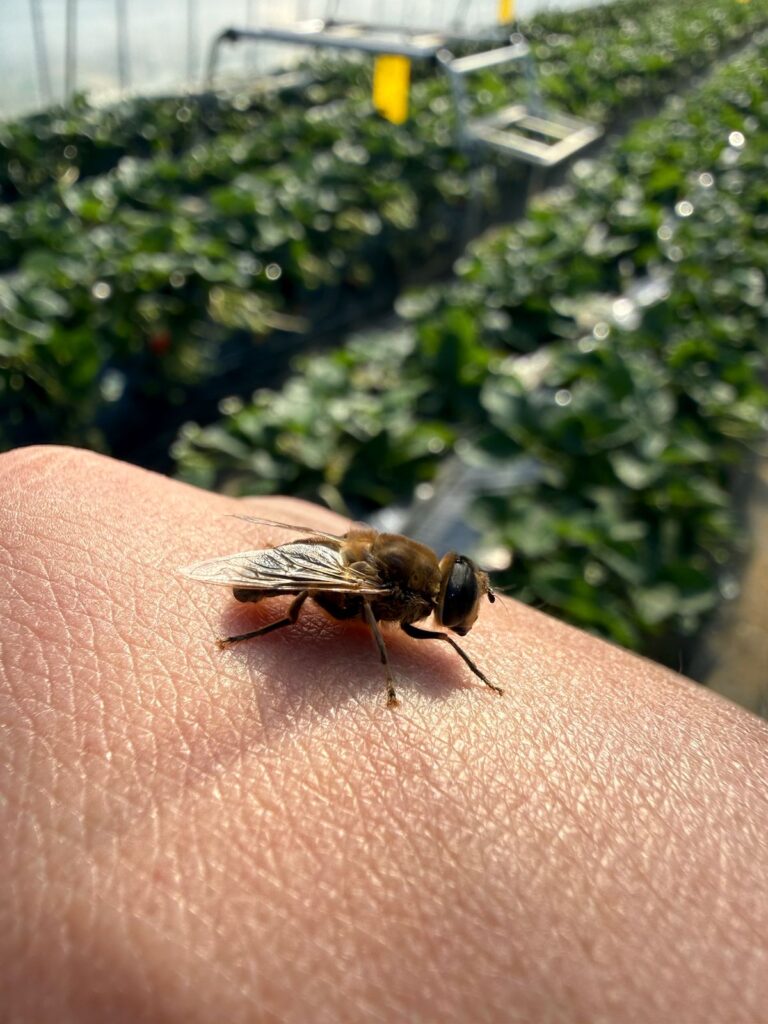
Why do Japanese farmers choose Queenfly and Goldfly?
The agricultural sector in Japan is facing a significant decline in bee availability due to factors such as high summer temperatures, mite infestations, and the ageing of beekeepers. In this context, they offer unique competitive advantages:
- Safety: Unlike bees or bumblebees, hoverflies do not sting or bite, making daily greenhouse work easier.
- Efficiency under adverse weather conditions: They are able to fly and work even on cloudy or rainy days, or under artificial light, conditions that often limit other pollinators.
- Biodiversity: As cosmopolitan species similar to those native to Japan, their use does not disrupt local ecological balance and allows deployment in both greenhouses and open fields.
- Compatibility: They can coexist with bees and bumblebees without conflict, enabling combined pollination strategies depending on crop needs.