
Strawberry: hoverfly pollination improves yield, quality and earliness
Improved strawberry production thanks to hoverfly pollination
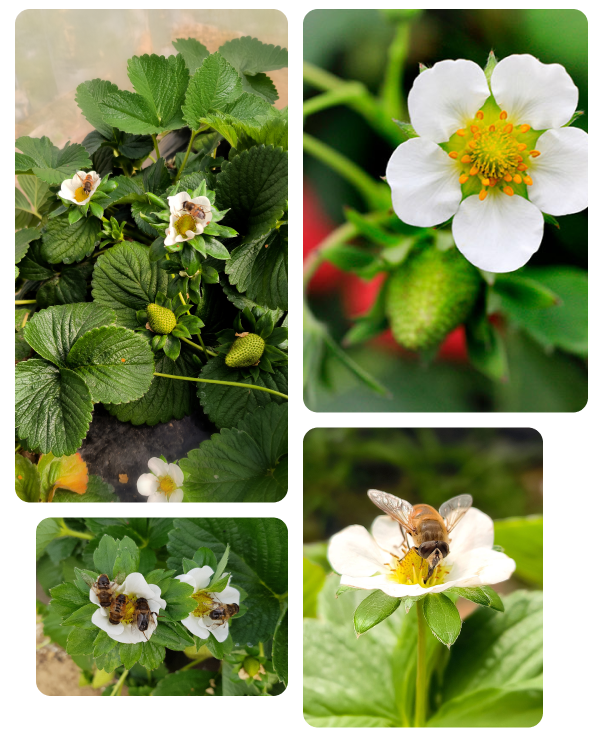
Between 2020 and 2025, Polyfly carried out a programme of hoverfly pollination trials on strawberries grown in tunnels, greenhouses, semi-open multi-tunnels and vertical farms.
The challenge: strawberries depend on good pollination
Each strawberry flower has dozens of pistils, and each one must be pollinated for the fruit to develop fully and evenly.
When pollination is poor, strawberries become misshapen and are downgraded to Class II, with little commercial value. Fruit quality, *its shape and commercial class – therefore depends directly on how effective pollination is.
Timing adds a further constraint. In the extra-early and early stages, with cold weather, cloud cover and short days, traditional pollinators barely fly, precisely at the start of the season. This shortfall reduces both the volume and the proportion of first-class fruit in the first weeks of harvest.
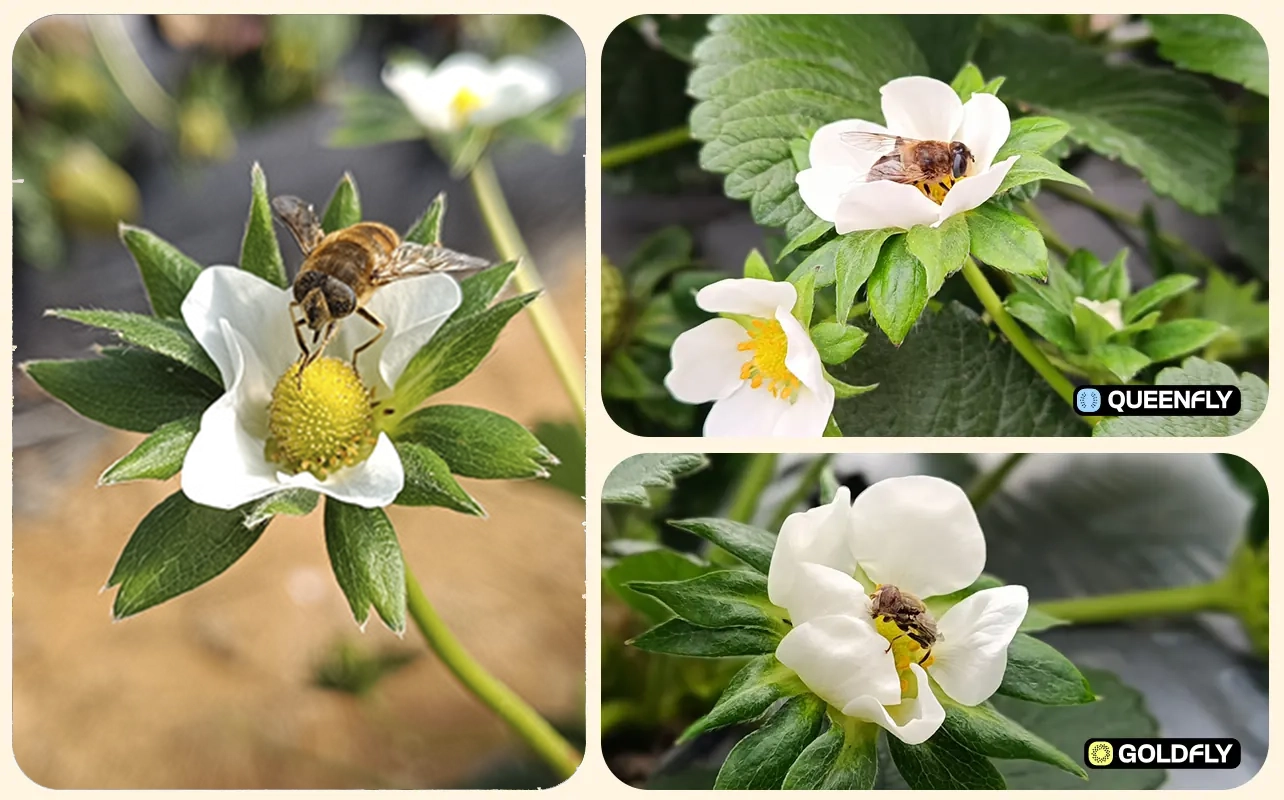
Polyfly is the first company in the world able to rear the hoverflies Eristalis tenax (QUEENFLY®) and Eristalinus aeneus (GOLDFLY®) on an industrial scale, also known as QUEENFLY® and GOLDFLY®, respectively. Polyfly has developed sustainable protocols that ensure a reliable supply for both protected and open-field crops.
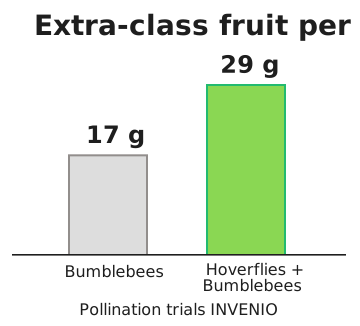
+73% Extra-class fruit
In the first harvests, combining hoverflies and bumblebees in a greenhouse in France increased Extra Class production by 73%, marketable production by 19% and total production by 15%.
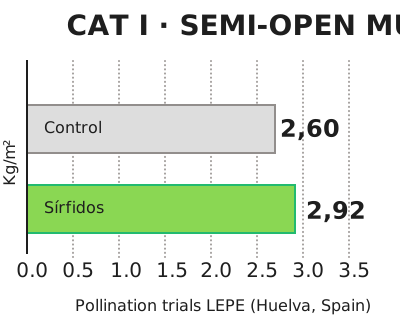
+12.3% Class I
In the semi-open multi-tunnel in Lepe (Huelva), the plot with hoverflies produced 12.3% more Class I strawberries: 2.92 vs 2.60 kg/m².
Better early harvests
The greatest effect occurs in the extra-early and early stages, when traditional pollinators barely fly and early yields are at their lowest.
Easy to apply
Supplied as ready-to-use pupae in recyclable boxes, with no complex handling required.
Active in cold and low light
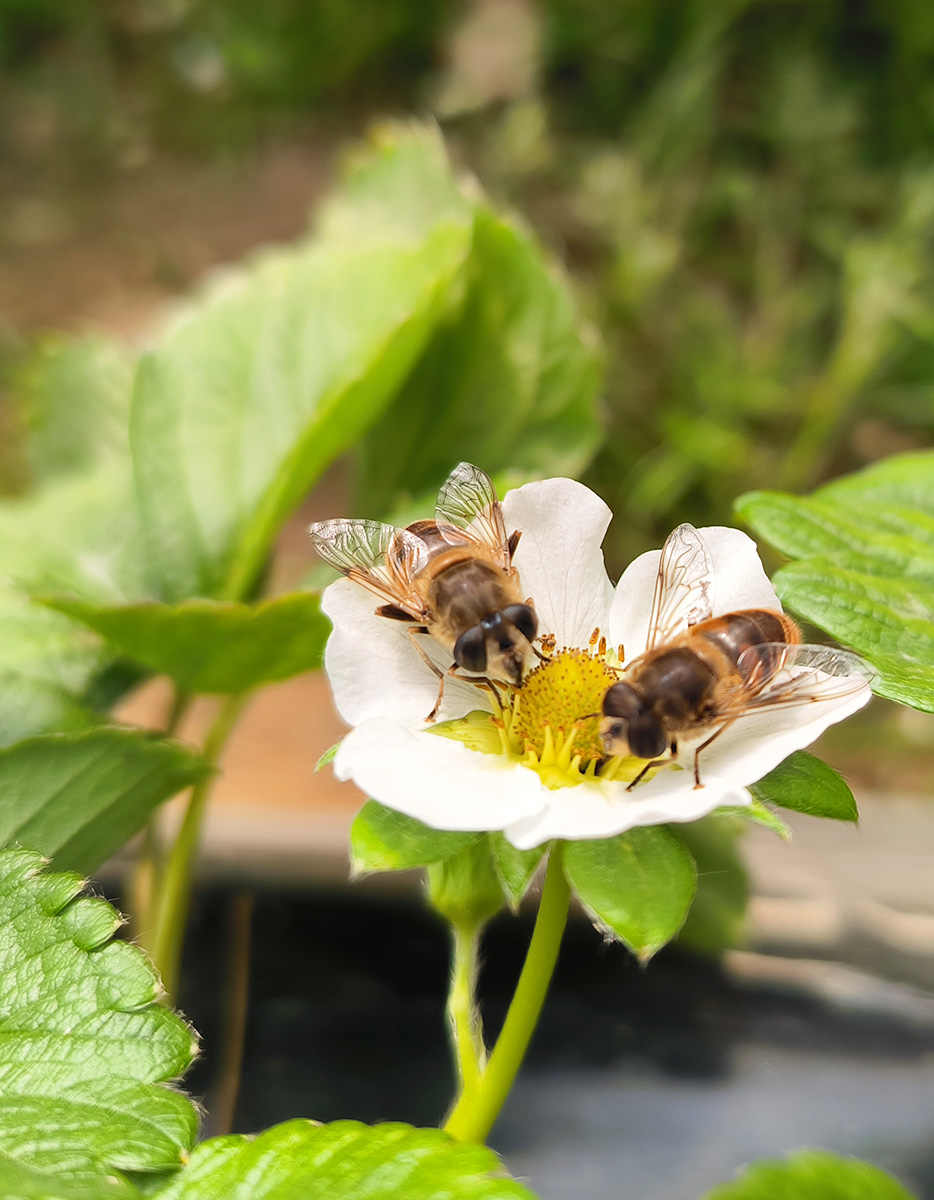
Hoverflies work across a wider temperature range than bumblebees and honeybees, even on cloudy days, and remain active under LED and SON-T lighting and in vertical cultivation.
Flowers left intact
They don’t sting, aren’t aggressive and are free of pathogens. Unlike bumblebees, which can damage petals and stamens, hoverflies feed without harming the flower, and they are compatible with bumblebees and honeybees.
Hoverflies, effective strawberry pollinators in all growing systems
Polyfly has worked with ADESVA (Huelva), Wageningen University & Research (Netherlands) and INVENIO (France), as well as with commercial growers, to evaluate the performance of QUEENFLY® and GOLDFLY® hoverflies against a control and traditional pollinators.

Tunnel (Huelva, ADESVA). In netted tunnels, hoverflies increased total and Class I production compared with the control, with the greatest effect in the extra-early and early stages. Peak production was achieved at a density of 5 ind./m². Individual fruit characteristics (size, firmness and sweetness) did not change; what changed was the harvest outcome: more first-class fruit and less misshapen fruit.
Greenhouse (Douville, INVENIO). When combined with bumblebees, hoverflies were active at lower temperatures and earlier in the day. In the first harvests, production was clearly higher: +73% Extra Class, +19% marketable and +15% total. Fruit weight was identical (12 g), so the improvement came from a greater number of well-formed fruit. Unlike bumblebees, which damaged petals and stamens, hoverflies left the flowers intact.
Greenhouse and vertical farming (Netherlands, Wageningen UR). The highest production and the highest proportion of first-class fruit were obtained with the combination of hoverflies and bumblebees. In contrast, bumblebees alone produced a higher proportion of misshapen fruit. Hoverflies remained active under different types of artificial lighting (LED and SON-T spectra) and in vertical farming, and they were compatible with honeybees.
Semi-open multi-tunnel (Lepe, Spain, commercial grower). Under semi-open conditions, with releases at a density of 2.5 ind./m², the hoverflies dispersed evenly throughout the tunnel. The plot with hoverflies produced 12.3% more Class I strawberries (2.92 vs 2.60 kg/m²)
Conclusions
Considering all the trials together, introducing hoverflies into strawberry cultivation increased production and improved harvest quality.
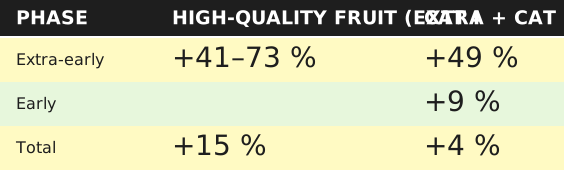
The greatest benefit is concentrated in the extra-early and early phases, when traditional pollinators are less active.
Recommended protocol
- Releases every 10–15 days from the start of flowering.
- Density of 2–5 individuals/m² per release.
- QUEENFLY® (E. tenax), GOLDFLY® (E. aeneus), or a combination of both, depending on crop temperature.
QUEENFLY® and GOLDFLY® are completely harmless to people and crops, and they are supplied as ready-to-use pupae in recyclable boxes, with no complex handling required. Overall, hoverfly pollination is a natural, sustainable and cost-effective solution for strawberry cultivation.
Polyfly hoverflies are effective strawberry pollinators: higher yield and more first-class fruit
Trials carried out by Polyfly between 2020 and 2025 in Spain, France and the Netherlands confirm that the hoverflies Eristalis tenax and Eristalinus aeneus are effective strawberry pollinators. Their use increases yield and improves quality, with more Extra and Class I fruit and less misshapen fruit, and it boosts earliness, with the greatest benefit in the extra-early and early phases. Compared with bumblebees and honeybees, they are active for more hours of the day and across a wider range of temperatures and light levels, they perform well under different types of artificial lighting and in vertical cultivation, they do not damage the flower, and they are compatible with other pollinators.
They are also suitable for semi-open crops such as multi-tunnels. Overall, hoverfly pollination is a natural, sustainable and productive solution for strawberry cultivation.
Contact us
If you would like more information, we can help you.