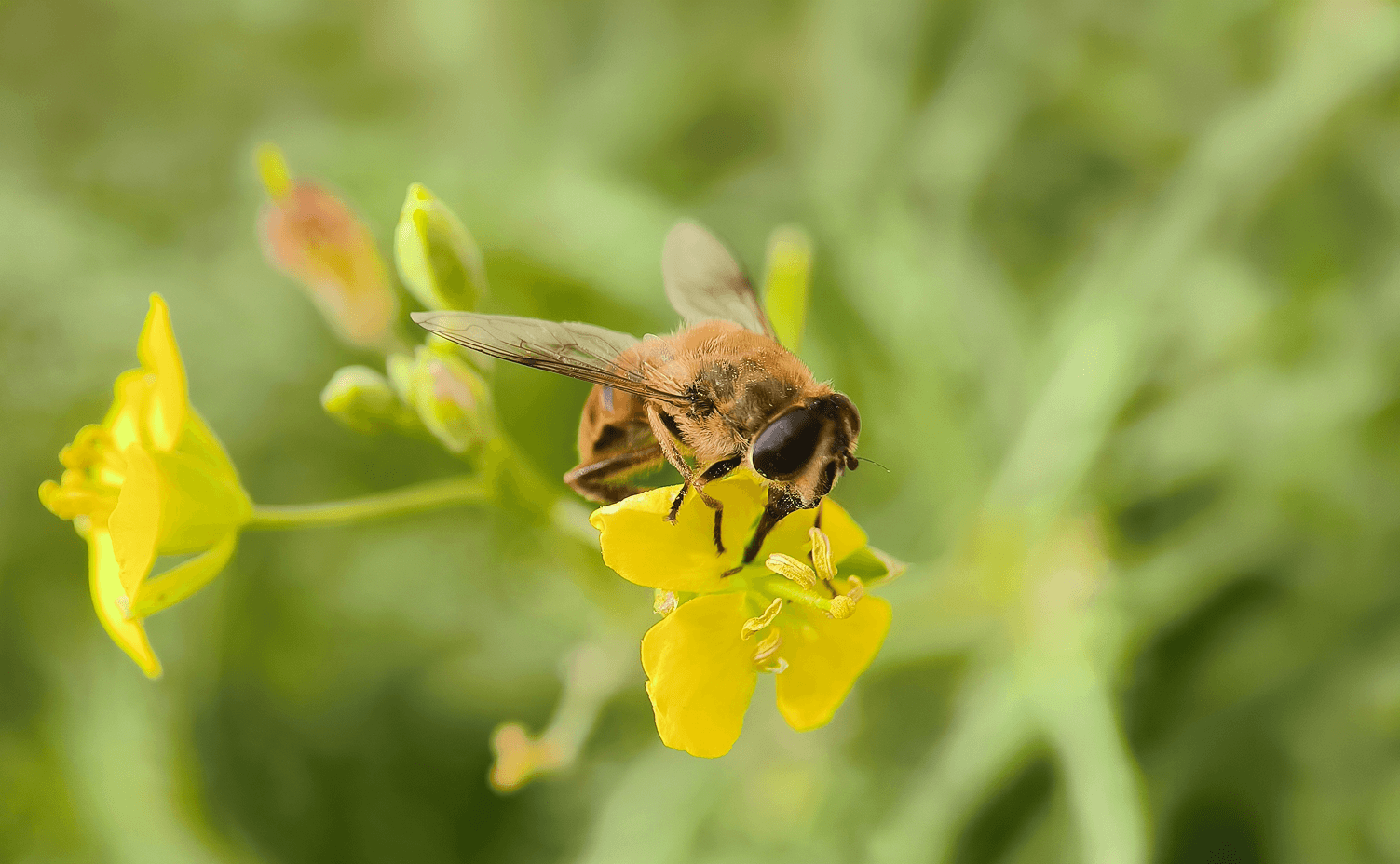
Hoverflies in wild rocket crops for seed multiplication



At Polyfly, innovation and science are the engines that drive our day-to-day. That is why we are very proud to share the results of our recent publication in the prestigious scientific journal Entomologia Experimentalis et Applicata.
If you are dedicated to seed multiplication, you know that choosing the right pollinator is no minor detail: it is a decision that directly impacts the profitability and quality of the seed harvest. Our latest study proves with solid data that the future of seed multiplication has wings, and they belong to hoverflies.
The pollination challenge in seed multiplication
Commercial seed production, especially in horticultural crops under isolated conditions (such as cages, tunnels, or greenhouses), presents unique challenges. Traditionally, species such as the blowfly (Lucilia sericata) have been used as an alternative when bees or bumblebees fail to adapt well to these confined environments. However, at Polyfly we worked together with Tozer Ibérica in a study focused on the wild rocket crop (Diplotaxis tenuifolia), a plant whose global demand continues to rise.
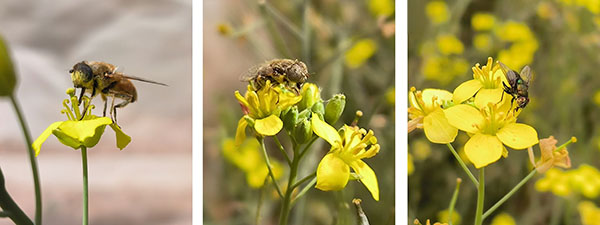
We designed a rigorous trial to compare the pollination efficacy of three different insect species:
- QUEENFLY® (Eristalis tenax): Our largest hoverfly, ideal for colder conditions.
- GOLDFLY® (Eristalinus aeneus): Our smallest but highly efficient hoverfly for warmer environments.
- Lucilia sericata: The blowfly, used as a traditional control in seed crossing.
The goal was to evaluate their behavior by observing the number of visits to the flowers, the amount of pollen they managed to deposit on the stigmas, and, most importantly, the final crop yield in terms of seed quantity and weight.
The results were absolutely revealing and confirmed what we had been observing in the field: hoverflies far outperform traditional flies in every metric evaluated.
- Higher frequency of effective visits: Hoverflies proved to be much more active. QUEENFLY made an average of 10.4 visits to flowers per plant, tripling the activity of Lucilia sericata, which barely reached 3.4 visits.
- Greater pollen transfer: They not only visit more flowers, but they do it better. Up to +257% more pollen deposited was recorded on the stigmas of the flowers pollinated by our hoverflies.
- More seeds: While the use of the traditional fly resulted in 14 grams of seeds per plant, plants pollinated by hoverflies produced up to 35 grams of seeds.
- Efficiency per individual: When isolating the impact of a single insect, the numbers are highly relevant. A single hoverfly was capable of producing around 7,496 seeds, compared to the mere 648 seeds generated by a blowfly.
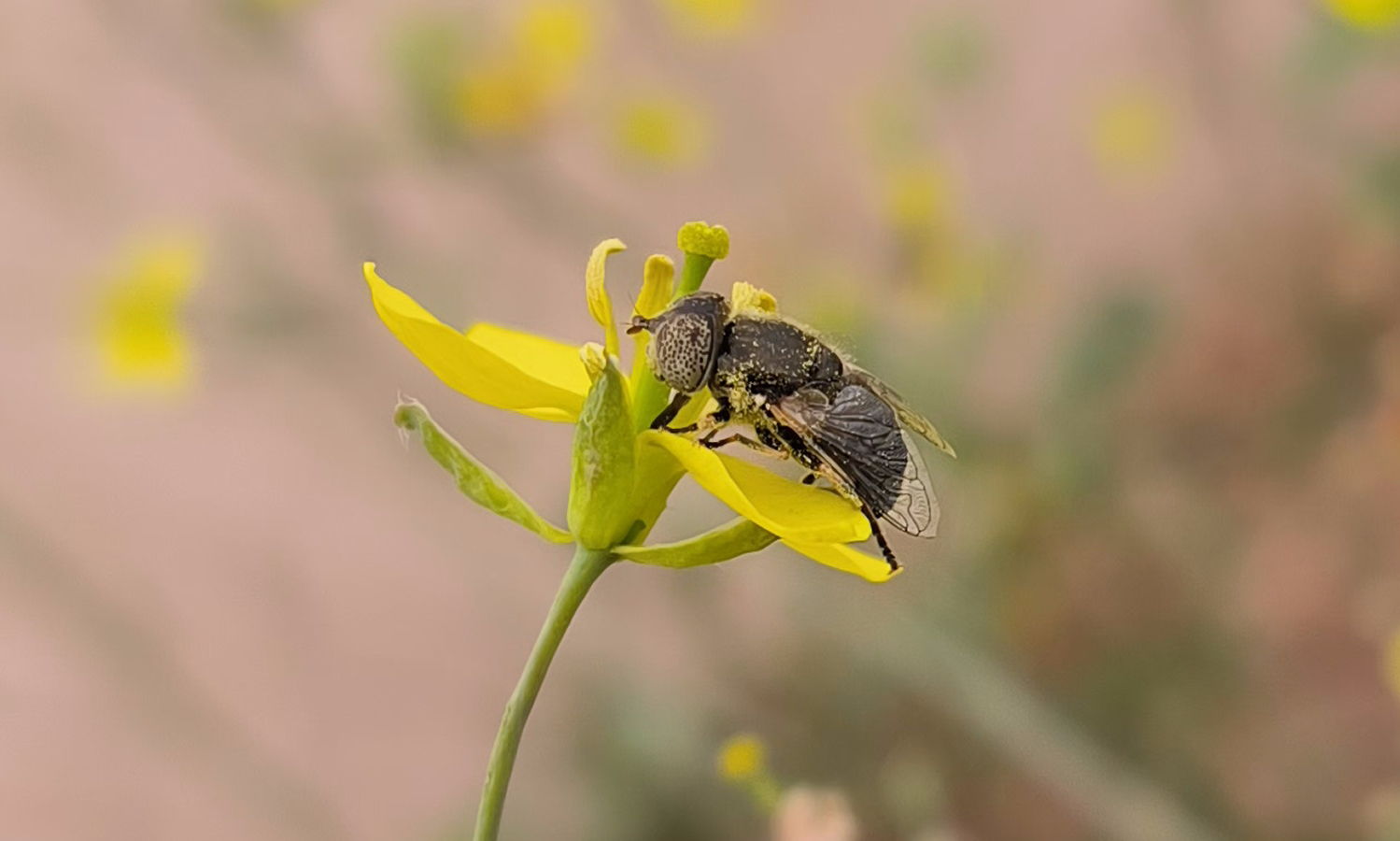
Therefore, we are very happy to confirm how Polyfly’s hoverflies are a sustainable and safe alternative in the way we multiply seeds. Their high mobility, their hairy bodies (which catch and transport large amounts of pollen), and their excellent adaptation to confined environments make them a competitive advantage for the future of seed production.
We invite you to read the full scientific article published in Entomologia Experimentalis et Applicata: