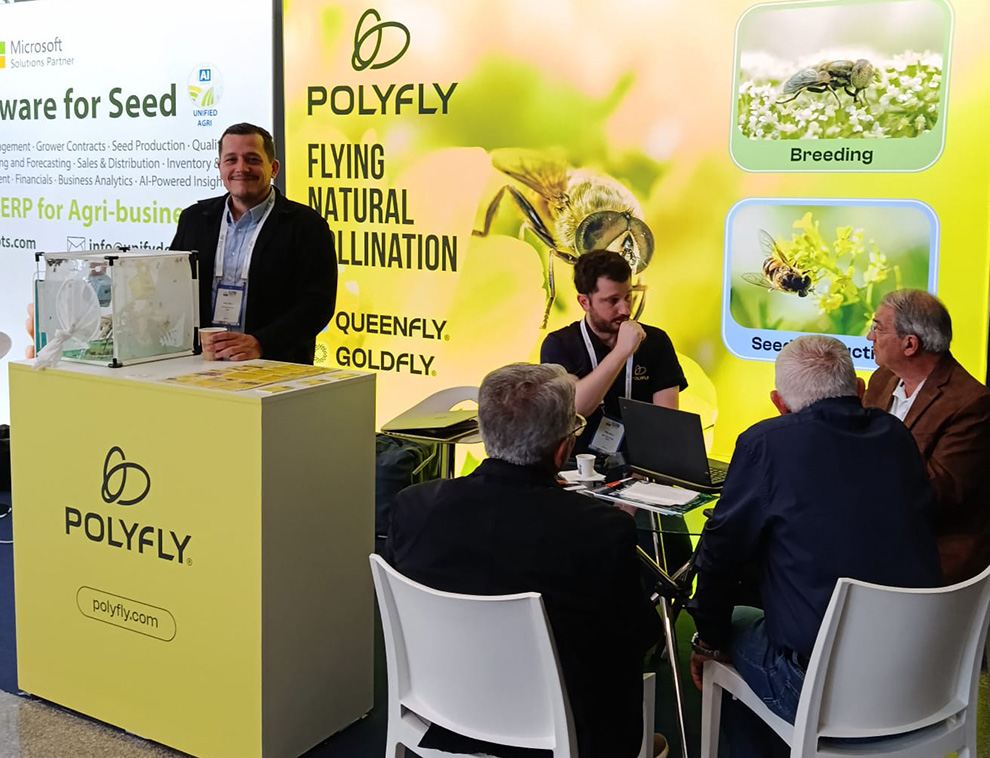
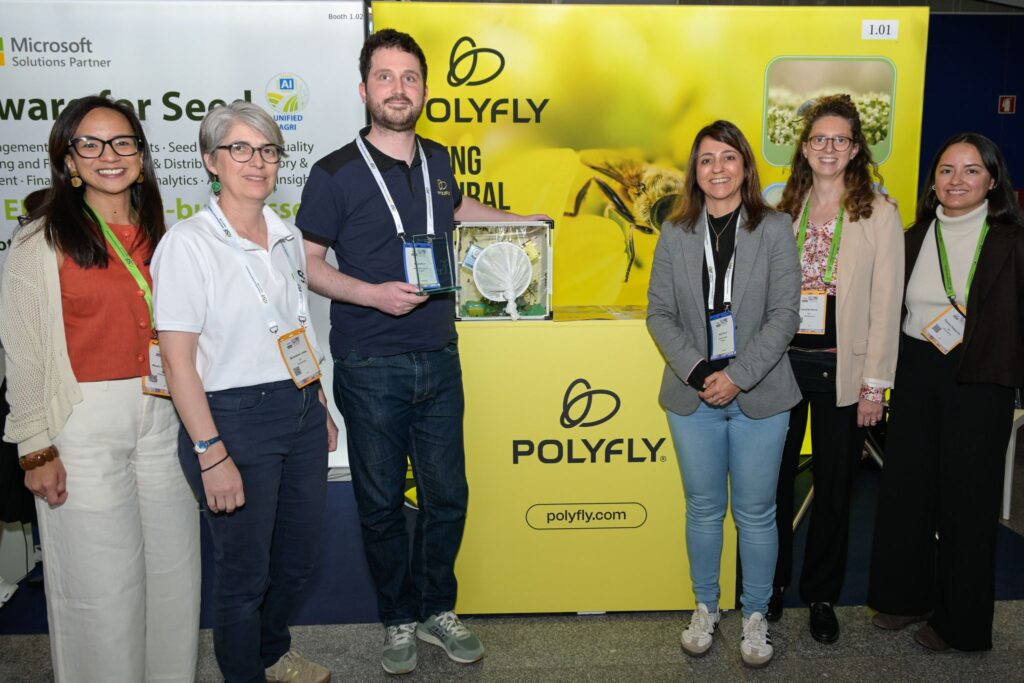
Winners of the Best Booth Award at the ISF World Seed Congress 2026



We are thrilled to receive the Best Booth Award during the recent ISF World Seed Congress 2026, held in Lisbon, Portugal. But most importantly, our participation in this congress—the largest annual gathering of the seed sector—was highly productive. In fact, this year broke participation records with over 1,800 delegates and guests from 78 countries. Under the theme “Joint Actions, Resilient Futures”, the event focused on food security, innovation, and climate adaptation, providing an unbeatable stage to highlight our work and vision.
Hoverfly pollination to ensure the stability of seed production
In a global context where agrifood systems face unprecedented climatic and environmental pressures, our mission at POLYFLY is clear. By focusing on alternative pollination methods—specifically through the use of hoverflies—we directly support seed companies and agricultural producers, solving one of the biggest bottlenecks in modern agriculture.
Ensuring effective, safe, and innovative pollination is essential to secure crop yields and maintain the stability of global seed production. Our solutions reinforce the resilience of the supply chain, protecting it against potential disruptions or declines in the availability of traditional pollinators.
Why are hoverflies key in seed crossing?
The production of high-quality hybrid seeds requires an extremely precise cross-pollination process, where pollen must travel efficiently from male to female parental lines. In this highly technical scenario, managed hoverflies like QUEENFLY® and GOLDFLY® offer incomparable operational advantages:
- Optimal performance in isolated environments: Unlike bees or bumblebees, which often suffer from stress, disorientation, or increased aggressiveness when working in confined spaces (such as tunnels, net cages, or isolation greenhouses), hoverflies adapt perfectly to captivity. They continue foraging naturally, guaranteeing genetic crossing without loss of efficiency.
- Ideal flight patterns for cross-pollination: In seed crops, some traditional insects tend to prioritize a single parental line out of habit (visiting only males or only females). Hoverflies, due to their erratic flight behavior and high mobility, constantly jump between different plants and flowers, maximizing pollen transfer between parental lines and ensuring a higher fruit set of viable seeds.
- Tolerance to climatic fluctuations: Polyfly’s hoverflies maintain their activity across a wider temperature range and under light conditions where other pollinators drastically reduce their work rate. This ensures that the parental flowering window, which is sometimes very short, is fully maximized.
- Biosecurity and ease of handling: Being non-stinging insects that do not form hierarchical colonies needing to be managed or removed, they greatly facilitate the work of agronomic staff inside the facilities, creating a safer and smoother working environment.
Relying on a single species for pollination is a risk the industry can no longer afford. By integrating hoverflies into production protocols, companies diversify their pollination. This strategy can help optimize genetic purity and yield per hectare.