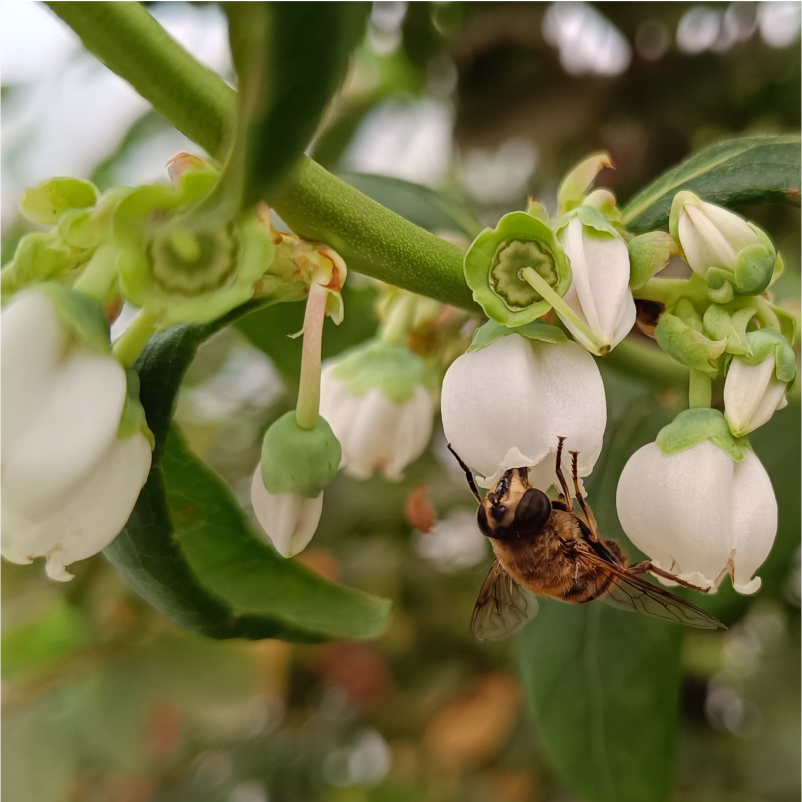
South Africa recognises pollination as productive infrastructure



When a government starts talking about pollination in the same terms it uses for water, ports or logistics, something important is changing in the way we understand agriculture.
In late June 2026, at the BeeCon 2026 conference of the South African Bee Industry Organisation (SABIO), held in South Africa’s North West province, the country’s then Minister of Agriculture, John Steenhuisen, defended an idea that deserves attention well beyond its borders: pollination should be recognised as productive agricultural infrastructure, and not as an ancillary environmental service.
At Polyfly, we have been working from that same conviction for years. That is why this message, reaching us from the other side of the hemisphere, fits naturally with the reason behind what we do.
From a “green” issue to an economic asset
Steenhuisen framed it through his own experience touring the sector: growers of citrus, stone fruit, macadamia, avocado or berries always voice the same concerns —competing in demanding international markets, improving productivity while costs rise, gaining certainty in biosecurity, logistics and export. And those conversations almost always revolve around water, roads, ports, rail, financing or market access.
His argument is that, increasingly, they should also revolve around pollination, because it has become one of those productive assets that quietly determine whether many of the highest-value agricultural industries thrive or not.
The congress theme itself —“Pollinators for food security, economic growth and rural transformation”— reflects that shift in perspective: pollination is no longer a niche environmental matter, but a factor of competitiveness.
The economic story that usually goes unnoticed
The common mistake, Steenhuisen noted, is to reduce the conversation about pollinators to honey or biodiversity. Both matter, but if the debate ends there, the largest part of the story is lost: the contribution of pollinators goes far beyond the hive.
Every season, pollination sustains the production systems behind the export industries. The consumer who buys South African citrus, apples, pears, macadamias, avocados or berries rarely thinks about it, but good pollination is one of the reasons those products reach the quality standards that allow them to compete in the world’s most demanding markets.
The figures shared by different speakers help to put it into perspective:
- According to the Director-General of the Department of Agriculture, Mooketsa Ramasodi, honey bees pollinate around 80% of the country’s fruit crops and, in many cases, pollination services can double production.
- From SABIO, Inge Austin recalled that more than 50 crops in South Africa depend on insect pollination, and that adequate pollination translates into higher-quality fruit, better pack-out rates and more reliable export shipments.
- FNB estimates that the beekeeping industry as a whole —with crop pollination as its main contribution— is worth in the order of 20 billion rand a year.
The benefit, Steenhuisen stressed, runs along the entire value chain: from the grower and the packhouse to exporters, processors and retailers, and from there to jobs in packing facilities, the cold chain, logistics and ports. Few agricultural services generate value across so many links at once.
A change of category: from “specialist service” to “productive investment”
The underlying argument is a change of mental category. Too often we treat pollination as a specialised service that accompanies commercial agriculture “from the outside”. In reality, it is part of the production system itself. Just as a farmer invests in improved genetics, in irrigation or in precision technology to raise productivity, pollination should also be understood as an investment in agricultural performance — one with its own ROI (return on investment), not a cost to be minimised.
Steenhuisen summed it up with an idea we fully share at Polyfly: when we recognise pollination as productive agricultural infrastructure, we begin to make different decisions in research, investment and long-term planning. It is not just about producing more honey, but about strengthening the production systems that allow agriculture to compete with the best in the world.
SABIO shares this same reading: for the organisation, pollination is not an environmental footnote on the side, but fundamental infrastructure for national food security and for the global competitiveness of export agriculture.
Why this speaks directly to us at Polyfly
The South African debate focuses, logically, on the honey bee and the beekeeping sector. But the principle behind it is species-agnostic: professional, managed, reliable and scalable pollination is productive infrastructure. And that is precisely the ground on which Polyfly works.
Our industrial-scale production of hoverflies, QUEENFLY® (Eristalis tenax) and GOLDFLY® (Eristalinus aeneus), answers that same need: to offer growers a managed, controllable and reproducible pollinator that reinforces fruit set, uniformity and fruit quality without depending exclusively on a single species or on the availability of colonies at a given moment. In a context where pollinator populations face growing pressures worldwide, having complementary, plannable pollination solutions ceases to be a luxury and becomes, precisely, infrastructure.
For a Ministry of Agriculture to start talking about pollination in these terms —as a productive asset and not as an environmental externality— is excellent news for the whole sector. It validates a way of working that we at Polyfly have defended from day one: pollination is planned, invested in and managed, because much of the value that agriculture delivers to the market depends on it.
Sources and further information
- Farmers Weekly — “Pollination is key to SA’s agricultural competitiveness” – Steenhuisen: https://www.farmersweekly.co.za/agri-news/south-africa/pollination-is-key-to-sas-agricultural-competitiveness-steenhuisen/
- IOL / Business Report — Beekeeping: A cornerstone of South Africa’s agricultural sustainability: https://iol.co.za/business-report/economy/2026-07-01-beekeeping-a-cornerstone-of-south-africas-agricultural-sustainability/
- Full speech by the minister (gov.za) — Minister John Steenhuisen: SABIO BEECON 2026: https://www.gov.za/news/speeches/minister-john-steenhuisen-sabio-beecon-2026-30-jun-2026
- Video: https://youtu.be/VPqYa9BbHBc
Note: at the time of the congress, John Steenhuisen held the Agriculture portfolio; shortly afterwards he was replaced by Willie Aucamp in a cabinet reshuffle.